What Is a Tengu? Origins, History, and Meaning in Japanese Folklore
Introduction
When people think of a Tengu, they often imagine a red-faced creature with an unusually long nose or a bird-like being with wings and a beak.
However, Tengu did not always look this way.
Ancient Japanese texts describe them as mysterious heavenly phenomena, while later traditions viewed them as invisible supernatural beings living in the mountains. Over time, Buddhism and mountain worship transformed Tengu into one of the most fascinating figures in Japanese folklore.
In this article, we will explore the origins of Tengu and how their appearance and role changed throughout Japanese history.
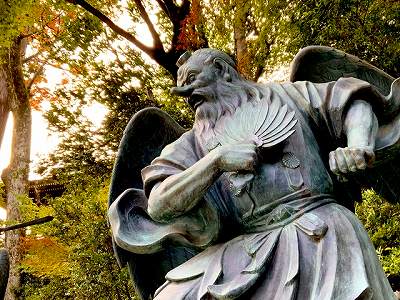
What Is a Tengu?
Tengu are supernatural beings that appear in Japanese folklore and religion.
Although they are often translated as “goblins" or “demons," neither term fully captures their nature. Depending on the period and the region, Tengu have been feared as dangerous spirits, respected as mountain guardians, and even worshipped as divine beings.
Several characteristics are commonly associated with Tengu:
- They are believed to live in mountains and forests.
- They possess supernatural powers.
- They can bring misfortune or protect sacred places.
- Their appearance and role have changed significantly throughout history.
Rather than being a single type of creature, Tengu reflect the beliefs and fears that Japanese people have held toward mountains and the unknown.
The Earliest Tengu Were Thought to Be Falling Stars
The oldest known reference to Tengu appears in the Nihon Shoki (The Chronicles of Japan), one of Japan’s oldest historical records.
An entry from the year 637 describes a strange object crossing the sky from east to west with a loud sound. The phenomenon was called Amatsukitsune, which literally means “heavenly fox."
Later generations associated this mysterious event with the origin of Tengu.
At this stage, Tengu had neither long noses nor bird-like faces. Instead, they represented a frightening and unexplained phenomenon beyond human understanding.
In other words, the earliest Tengu were not mountain goblins but mysterious omens appearing in the sky.
Tengu in the Heian Period: Invisible Supernatural Beings
During the Heian period (794–1185), the image of Tengu changed significantly.
Instead of being mysterious objects in the sky, Tengu came to be associated with strange events that occurred deep in the mountains.
Collections of stories such as the Konjaku Monogatarishū (Tales of Times Now Past) describe Tengu as beings that deceived people, led travelers astray, and disturbed Buddhist practitioners.
Interestingly, these early Tengu did not yet have the familiar appearance of long noses or bird-like faces.
Rather, the word “Tengu" referred to unexplained supernatural phenomena themselves.
If someone disappeared in the mountains, heard mysterious sounds, or experienced strange visions, people often believed that Tengu were responsible.
In this sense, the Heian-period Tengu were invisible and frightening beings that represented the unknown.
Why Were Tengu Associated with Buddhism?
As Buddhism spread throughout Japan, the image of Tengu changed once again.
They gradually came to be regarded as enemies of Buddhism, similar to demons that tempted monks and obstructed religious practice.
People believed that strange visions, pride, and temptations encountered during ascetic training were caused by Tengu.
Because of this, Tengu were sometimes described as beings that stood between the human world and the world of demons.
They were feared not simply as monsters but as spiritual forces capable of leading people away from enlightenment.
Could Humans Become Tengu?
By the medieval period, a new belief had emerged: human beings themselves could become Tengu after death.
This idea greatly influenced later Japanese legends and helped shape the image of Tengu that survives today.
The Idea of the Tengu Realm
According to medieval Buddhist thought, arrogant monks who became overly proud of their spiritual achievements could fall into a place known as the “Tengu Realm."
These individuals were not considered completely evil, so they did not descend into hell.
However, because they were consumed by pride and attachment, they also could not attain enlightenment.
As a result, they became Tengu.
This belief turned Tengu into symbols of human arrogance and spiritual failure rather than simple mountain monsters.
The Legend of Emperor Sutoku
One of the most famous figures associated with Tengu is Emperor Sutoku (1119–1164).
After losing the Hōgen Rebellion, the retired emperor was exiled to Shikoku.
According to later legends, he died filled with resentment and transformed into a powerful Tengu whose anger brought disasters upon the nation.
Although historians do not regard this story as a historical fact, it became one of Japan’s most famous Tengu legends.
The tale also illustrates another important aspect of Tengu: they could embody human emotions such as anger, resentment, and obsession.
The Connection Between Tengu and Mountain Asceticism
Over time, Tengu became closely connected with Shugendō, a Japanese religion that combines mountain worship, Buddhism, and folk beliefs.
This relationship had a profound influence on the modern image of Tengu.
Tengu as Mountain Spirits
Mountains have long been considered sacred places in Japan.
As Shugendō developed, Tengu gradually came to be viewed as spirits and guardians of these sacred mountains.
However, they were not always benevolent.
Tengu could create storms, lead travelers astray, or cause mysterious disappearances.
They represented both the protective and the terrifying aspects of nature.
Protectors of Mountain Ascetics
Followers of Shugendō, known as yamabushi, believed that Tengu protected those who trained in the mountains.
This connection explains why many modern depictions of Tengu wear the robes and small black caps traditionally associated with yamabushi.
The familiar image of Tengu as mountain-dwelling ascetics is therefore deeply rooted in the history and beliefs of Shugendō.
Why Do Tengu Have Long Noses?
The image of the long-nosed Tengu that people recognize today did not exist in ancient Japan.
Early Tengu were invisible supernatural beings or mysterious forces associated with mountains and the sky.
So where did the famous long nose come from?
One theory connects the modern Tengu to masks used in Gigaku, an ancient form of masked dance drama introduced to Japan from the Asian continent.
The original Chidō mask can be viewed in the online collection of Japan’s National Institutes for Cultural Heritage.
The Influence of the Chidō Mask
One of the masks used in Gigaku is called the Chidō mask.
It features a red face and an unusually long nose, characteristics that closely resemble the modern long-nosed Tengu.
Although the Chidō mask itself was not originally a Tengu, many researchers believe that its appearance influenced later artistic depictions of Tengu.
The resemblance is striking and may have helped shape the image that survives today.
The Birth of Karasu-Tengu
Another Gigaku mask, known as Karura, may have influenced the appearance of the Karasu-Tengu, or Crow Tengu.
Karura is a bird-like divine creature in Buddhism and is usually depicted with a sharp beak.
This bird-like appearance strongly resembles the modern Karasu-Tengu.
Over time, Buddhist symbolism, mountain worship, and folk beliefs combined to create the familiar forms of Tengu that are known today.
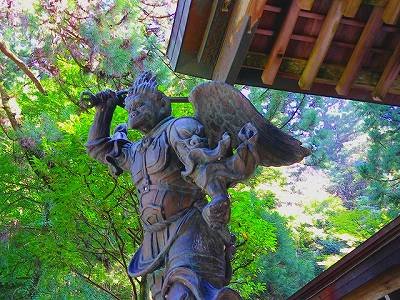
Karasu-Tengu and Long-Nosed Tengu: What’s the Difference?
The two most famous forms of Tengu are the long-nosed Tengu and the Karasu-Tengu.
Although they are often grouped together, they have different appearances and traditions.
【Insert Image 3 Here】
Caption:
Comparison of the two major types of Tengu.
| Feature | Long-Nosed Tengu | Karasu-Tengu |
|---|---|---|
| Face | Red human face | Bird-like face |
| Nose | Long nose | Beak |
| Position in legends | Often portrayed as a leader | Often portrayed as a follower |
| Possible origin | Chidō mask and Sarutahiko traditions | Karura imagery in Buddhism |
Since the Edo period, these two forms have become the standard image of Tengu in Japanese art and popular culture.
Tengu in Japanese Folk Beliefs
In folk traditions, Tengu were not always thought of as physical beings.
Instead, many unexplained events in the mountains were attributed to them.
Examples include:
- Tengu Daoshi: a mysterious crashing sound as if trees were falling.
- Tengu Bayashi: strange music or drumming heard in the mountains.
- Tengu Warai: eerie laughter echoing through the forest.
- Tengu-bi: mysterious lights appearing in remote areas.
- Tengu Tsubute: stones that seemed to fly through the air by themselves.
These legends reveal an important aspect of Tengu.
At their core, they represented humanity’s fear of the unknown forces hidden within nature.
The True Identity of Tengu
So, what exactly is a Tengu?
The answer depends on the period in Japanese history.
At various times, Tengu have been seen as:
- Celestial omens
- Invisible supernatural beings
- Enemies of Buddhism
- Spirits of arrogant monks
- Guardians of sacred mountains
- Long-nosed and bird-like creatures of folklore
Rather than being a single creature with a fixed identity, Tengu are a collection of ideas that evolved over centuries.
They reflect the changing beliefs, fears, and religious traditions of the Japanese people.
In many ways, Tengu embody Japan’s deep respect for mountains and its fascination with mysterious forces beyond human understanding.
Conclusion
Today, Tengu are among the most recognizable figures in Japanese folklore.
However, they did not begin as long-nosed mountain spirits.
The earliest Tengu were mysterious heavenly phenomena recorded in ancient chronicles. During the Heian period, they became invisible supernatural beings associated with strange events in the mountains. Later, Buddhism and Shugendō transformed them into both feared and revered spiritual entities.
The familiar images of the long-nosed Tengu and the Karasu-Tengu emerged only after centuries of cultural and religious change.
Understanding the history of Tengu reveals more than the story of a single mythical creature.
It also offers a fascinating glimpse into how Japanese people have viewed nature, religion, and the unknown throughout their history.
Related Articles