Japanese Mythical Creatures: Sacred Beasts, Yokai, and Legendary Animals Explained
Japan is home to countless mythical creatures that have been passed down through legends, religious traditions, and folklore.
Some are sacred beasts worshipped as divine messengers. Others are legendary creatures that symbolize wisdom, protection, or good fortune. Still others belong to the world of yokai, the strange supernatural beings that continue to fascinate people today.
These creatures are more than imaginary monsters. Their images can still be found in shrines, temples, traditional festivals, paintings, and local legends throughout Japan.
This guide introduces some of Japan’s most famous mythical creatures, their symbolism, and the ways their cultural legacy survives today.
What Are Japanese Mythical Creatures?
The English phrase “Japanese mythical creatures" covers several different kinds of supernatural beings.
Some are sacred animals connected with religion and worship. Others are legendary creatures that symbolize wisdom, peace, or protection. There are also yokai, mysterious beings that occupy the space between folklore, religion, and imagination.
Sacred Beasts (Shinjū)
Sacred beasts are animals that are worshipped as gods or as messengers of the gods.
Examples include guardian creatures such as Komainu and divine beings such as dragons. They are closely connected with shrines, religious traditions, and local beliefs.
Spiritual Creatures (Reijū)
Spiritual creatures are legendary beings associated with good fortune, knowledge, and supernatural power.
Creatures such as the Kirin and Hakutaku belong to this category. They often appear in paintings, legends, and classical literature rather than as objects of direct worship.
Yokai and Other Supernatural Beings
Japan is also famous for its yokai, mysterious beings that range from frightening monsters to mischievous tricksters.
Creatures such as Tengu, Kappa, and Nue have inspired countless stories and remain an important part of Japanese popular culture.
Oni (鬼) are another famous example, known today as horned monsters but originally associated with spirits and unseen supernatural beings.
Quick Guide to Japanese Mythical Creatures
The following creatures are among the most famous supernatural beings in Japanese tradition.
| Creature | Symbolism |
|---|---|
| Kirin | Peace and virtue |
| Komainu | Protection from evil |
| Tengu | Mountains and supernatural power |
| Hakutaku | Wisdom and protection |
| Hōō (Japanese Phoenix) | Happiness and renewal |
| Yatagarasu | Divine guidance |
| Four Symbols (Four Guardian Beasts) | Protection of the four directions |
| Ryū(Japanese Dragon) | Water, power, and prosperity |
| Kappa | Water and fertility |
| Nue | Mystery and ominous signs |
| Okuchi no Magami | Protection of the mountains |
| Tamamo-no-Mae | Beauty, temptation, and danger |
| Taniguku | Water and guidance |
Sacred Beasts and Spiritual Creatures of Japan
Japanese mythology and folklore feature many sacred and spiritual creatures, each with its own symbolism and cultural role. Some are worshipped in shrines and temples, while others survive through legends, art, and traditional stories.
Kirin
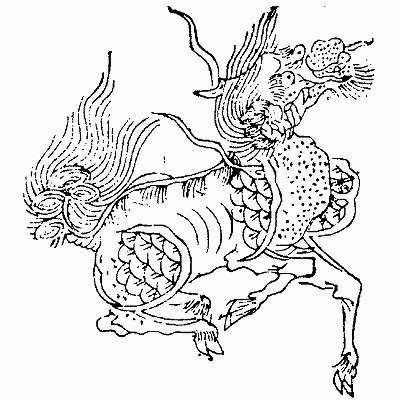
The Kirin, known in Chinese as the Qilin (pronounced “chee-lin"), is one of East Asia’s most auspicious mythical creatures.
It is traditionally associated with peace, wisdom, and the appearance of a virtuous ruler. Ancient texts describe it as a gentle creature that avoids harming even insects and plants.
Although modern illustrations often depict the Kirin with dragon-like features, early descriptions portray it quite differently. Today, the Kirin continues to appear in traditional performances, shrine decorations, and works of art throughout Japan.
Komainu
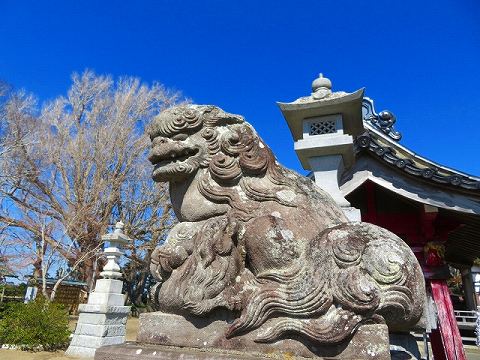
Komainu are guardian creatures that stand at the entrances of many Japanese shrines.
Despite their name, which literally means “Korean dogs," Komainu are lion-like guardian creatures whose origins can be traced through China and the Korean Peninsula before reaching Japan.
Their role is to protect sacred spaces from evil influences.
Most pairs of Komainu represent the sounds “A" and “Un," symbolizing the beginning and end of all things. Because they can be found at shrines throughout the country, they are among the most familiar sacred creatures in Japan.
Hakutaku
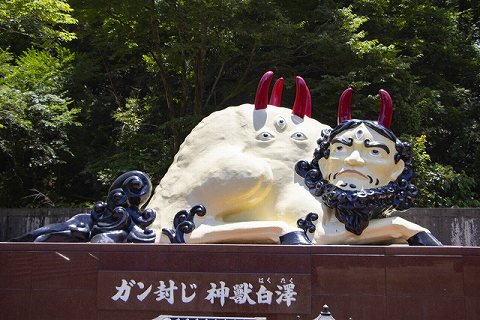
Hakutaku is a legendary creature famous for its wisdom and knowledge.
According to Chinese tradition, it was said to possess extensive knowledge of supernatural beings and taught humans how to protect themselves from harmful spirits and diseases.
In Japan, Hakutaku became associated with protection against epidemics and misfortune. Its image appears in illustrated scrolls, talismans, and folklore related to healing and good fortune.
Hōō (Japanese Phoenix)
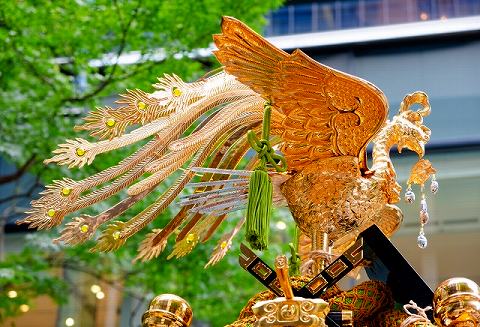
The Hōō, often called the Japanese Phoenix, is a sacred bird associated with peace, harmony, and virtuous rule.
Unlike the Western phoenix, which is associated with rebirth through fire, the Hōō primarily symbolizes prosperity and the arrival of an ideal age.
The Hōō can still be seen in temple architecture, most famously on the roofs of historic buildings such as Byōdō-in and Kinkaku-ji.
Yatagarasu
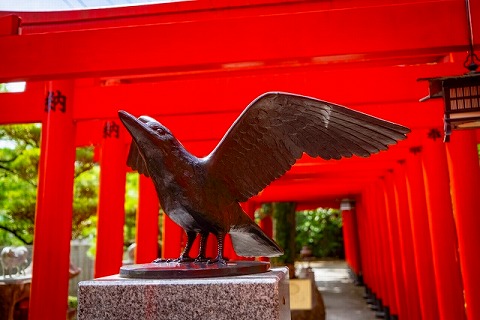
Yatagarasu is the legendary three-legged crow of Japanese mythology.
According to the ancient chronicles, it guided Emperor Jimmu during his journey to establish the Japanese nation. Because of this role, Yatagarasu became a symbol of divine guidance and correct direction.
Today, it remains an important symbol of the Kumano region and continues to appear in religious traditions and popular culture.
The Four Symbols (Four Guardian Beasts)
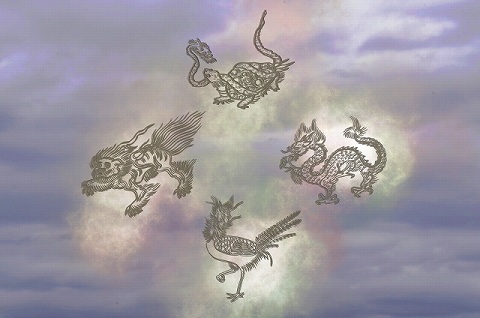
The Four Symbols, also known as the Four Guardian Beasts, are four mythical creatures that protect the cardinal directions in East Asian cosmology.
They consist of:
- Azure Dragon of the East
- White Tiger of the West
- Vermilion Bird of the South
- Black Tortoise of the North
Originally derived from Chinese cosmology, these creatures became deeply integrated into Japanese religion and art. Their images can still be found in shrine carvings, temple decorations, and traditional paintings.
Ryū(Japanese Dragon)
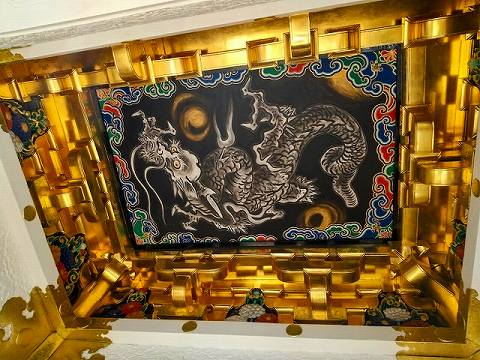
The Japanese dragon, or Ryū, is one of the most important sacred creatures in Japanese tradition.
Unlike many Western dragons, Japanese dragons are usually associated with water, rain, and protection rather than destruction. They are often regarded as divine beings that govern rivers, lakes, and the sea.
Dragon imagery appears throughout Japan in temple paintings, shrine legends, and religious ceremonies, making the dragon one of the country’s most enduring mythical creatures.
Creatures That Exist Between Gods and Yokai
Not every supernatural being in Japanese tradition fits neatly into the categories of sacred beasts or divine messengers.
Some creatures exist somewhere between religion, folklore, and legend. They may not be worshipped as gods, yet they continue to fascinate people through stories, art, and local traditions.
Tengu
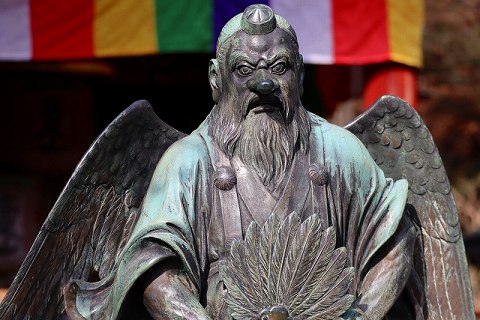
Tengu are among Japan’s most famous supernatural beings.
Today, they are usually depicted as red-faced, long-nosed mountain spirits or as bird-like creatures with wings. However, their image has changed dramatically over the centuries.
They have been associated with mountain worship, ascetic monks, and mysterious powers that exceed ordinary human abilities.
Kappa
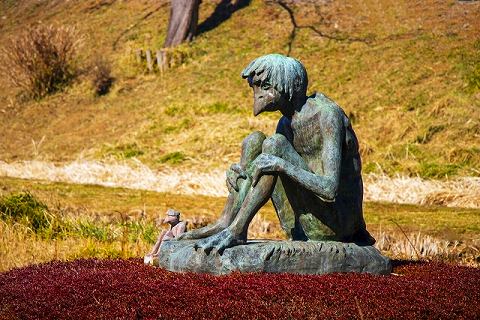
Kappa are water-dwelling creatures found throughout Japanese folklore.
They are often portrayed as mischievous beings that live near rivers and ponds. In some regions, however, they are also regarded as water spirits connected with agriculture and local traditions.
Kappa legends are found throughout Japan, and similar beings are known by different names, such as Enkō in Shikoku and Garappa in Kyushu.
Nue
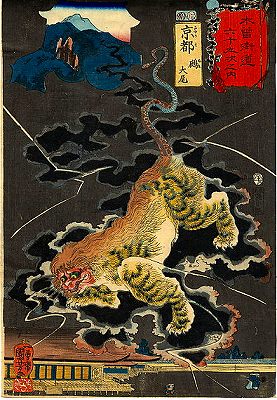
The Nue is one of Japan’s strangest legendary creatures.
In medieval literature, it is often described as a chimera made from several different animals. Yet its appearance varies from one source to another.
Because no single description became definitive, the Nue remains a symbol of mystery and the unknown.
Tamamo-no-Mae
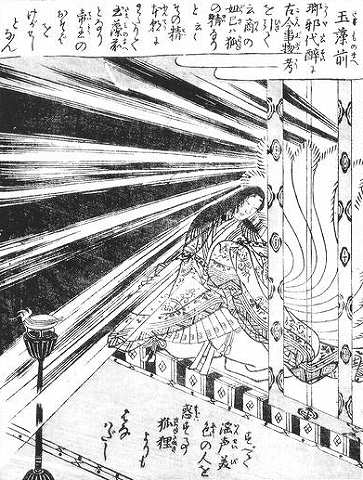
Tamamo-no-Mae is a legendary fox spirit famous for her beauty and intelligence.
According to the legend, she disguised herself as a court lady and brought misfortune to the imperial court before her true identity as a nine-tailed fox was revealed.
Her story continues to inspire literature, theater, and popular culture.
Okuchi no Magami
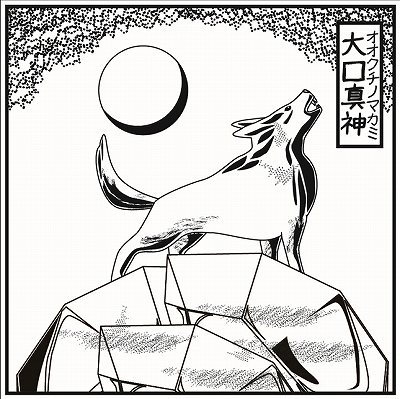
Okuchi no Magami is a deified Japanese wolf that serves as a protector of the mountains.
In some shrine traditions, it is associated with protection from fire, theft, and other disasters. Even after the extinction of the Japanese wolf, worship of Okuchi no Magami remains an important part of local religious traditions.
Taniguku
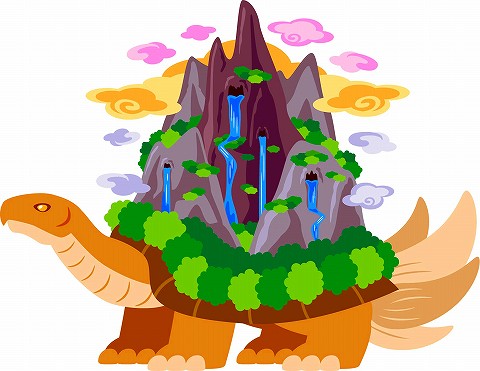
Taniguku is a lesser-known figure from Japanese mythology associated with a toad.
Later traditions sometimes connect Taniguku with water and divine guidance. Although not as widely known as other mythical creatures, Taniguku demonstrates the remarkable diversity of Japan’s supernatural traditions.
How These Creatures Live On Today
Japanese mythical creatures are not confined to ancient books and legends. Their images and stories still shape Japanese culture in many ways.
Shrines and Religious Traditions
Many sacred creatures remain closely connected with shrines and religious practices.
Komainu guard the entrances of shrines across Japan, while Yatagarasu continues to be revered in the Kumano region. Dragons and other sacred beings also remain deeply woven into local traditions and beliefs.
Festivals and Traditional Performances
Some mythical creatures survive through traditional festivals and performances.
For example, the Kirin Lion Dance of Tottori Prefecture preserves the image of the Kirin in local culture. Similar traditions throughout Japan keep many legendary creatures alive in the public imagination.
Paintings, Statues, and Architecture
Mythical creatures frequently appear in Japanese art and architecture.
Dragons decorate temple ceilings, the Hōō adorns historic buildings, and the Four Symbols can be found in shrine carvings and paintings.
These artistic representations ensure that ancient legends remain visible even today.
Local Legends and Regional Identity
Many communities continue to celebrate their own legendary creatures.
Kappa legends, mountain spirits, and local guardian animals are often closely tied to regional history and identity. In this way, mythical creatures still play a meaningful role in connecting people with their cultural heritage.
Frequently Asked Questions
What is the most famous Japanese mythical creature?
There is no single answer, but dragons, Tengu, Kappa, and the Kirin are among the best-known mythical creatures in Japan.
What is the difference between a sacred beast and a yokai?
Sacred beasts are generally associated with religion and divine protection, while yokai are supernatural beings that belong primarily to folklore and legend. Some creatures share characteristics of both.
Are these creatures still important in Japan today?
Yes. Their stories continue to influence religion, art, festivals, literature, and popular culture throughout Japan.
Can you still find these creatures in Japan?
Although mythical creatures do not exist in a literal sense, their images and legends survive in shrines, temples, traditional performances, and local customs across the country.
Final Thoughts
Japan’s mythical creatures are far more than imaginary beings from the distant past.
They continue to live on through religious traditions, works of art, local legends, and cultural practices that can still be experienced today.
From the peaceful Kirin and the wise Hakutaku to the mysterious Nue and the mischievous Kappa, these creatures reveal the richness and diversity of Japanese folklore.
Exploring their stories offers a fascinating way to understand Japan’s history, beliefs, and imagination.
Related Articles