What Does the Japanese Symbol “〆” Mean? Origin, Usage, and Why It Is Not Just an Abbreviation
Have you ever noticed the mysterious symbol 〆 while reading Japanese?
You might see it in words like 〆切 (deadline) or hear someone say that ramen is the 〆 of a meal.
At first glance, it does not look like a typical kanji, so many Japanese learners wonder what it actually is.
- Is it a symbol?
- Is it an abbreviation?
- Or is it a real character?
The answer is more interesting than it first appears.
In this article, you will learn what 〆 means, where it is used, why it is read shime, whether it is considered a kanji, and how it differs from the similar character 乄.
What Is the Japanese Symbol 〆?
The character 〆 is most commonly used in modern Japanese as a shorthand form associated with the verb 締める (shimeru).
This verb means to close, tighten, finish, or bring something to an end.
Because of this, 〆 often carries the idea of ending or wrapping up something.
| Japanese | Meaning |
|---|---|
| 〆切 | Deadline |
| 飲み会の〆 | The final dish or activity at the end of a drinking party |
| 仕事の〆 | Wrapping up work |
Although many Japanese people think of 〆 simply as an abbreviation of 締, its history is more complex.
It is not just a modern shortcut.
Japanese dictionaries treat it as a character with its own background.
Where Is 〆 Used in Japanese?
Even if you have never studied Japanese in depth, you may come across 〆 in everyday situations in Japan.
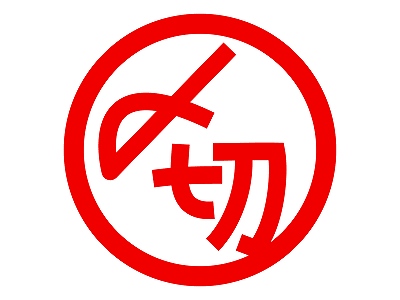
One of its most common uses is 〆切 (shimekiri), meaning deadline.
You may see this word on websites, application forms, event notices, and advertisements.
The symbol also appears when talking about the final part of a meal.
After enjoying several dishes at an izakaya or restaurant, Japanese people may refer to the last dish, such as ramen, rice, or dessert, as the 〆 of the meal.
More generally, 〆 can describe the act of bringing something to a close.
It may be used when talking about finishing work, concluding a meeting, or wrapping up an event.
Once you understand that 〆 is connected with the idea of closing or ending, its meaning becomes much easier to recognize.
Is 〆 a Kanji?
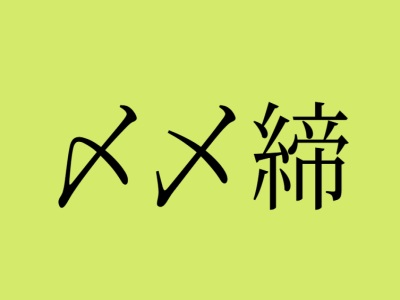
At first glance, 〆 looks more like a symbol than a kanji.
However, several Japanese kanji dictionaries treat it as a genuine character rather than a simple punctuation mark or decorative sign.
For example, the kanji dictionary Kangenjiten (漢字源) lists 〆 as a variant form of 乄.
In other words, 〆 has its own place in Japanese writing and is not merely an informal abbreviation created in modern times.
Today, many people use 〆 as a shorthand form related to 締, but its historical background cannot be explained only by saying that it is a simplified version of 締.
Another unique symbol in Japanese writing is 々, the kanji repetition mark used to repeat the preceding character.
While 〆 has its own meaning and usage, 々 serves a completely different purpose in written Japanese.
👉 What Does the Japanese Symbol “々" Mean?
Why Is It Pronounced “Shime"?
The pronunciation shime comes from the Japanese verb 締める (shimeru).
This verb means to close, fasten, tighten, or finish.
According to the Shin Meikai Etymological Dictionary of Japanese, shime developed from 締め, the noun form of 締める.
Historically, ropes and cords were often used to tie together documents, packages, or other objects.
Because of this, the idea of tightening naturally became connected with closing or bringing something to an end.
This explains why 〆 appears in expressions such as 〆切, 飲み会の〆, and 仕事の〆.
Although the connection with 締める is clear, the exact reason why this particular character came to be read as shime is not completely certain.
Where Did 〆 Come From?
The exact origin of 〆 is uncertain, but there are two main theories.
Theory 1: It Developed from 卜
The leading theory traces 〆 back to the character 卜.
According to explanations introduced by the Kanji Culture Museum, Dai Kan-Wa Jiten, a major Chinese-Japanese character dictionary, explains 〆 as a character that developed from 卜.
The character 卜 was originally connected with divination.
In ancient times, divination was sometimes used when choosing or determining a place.
From there, the meaning may have developed toward ideas such as occupying, closing, or bringing something under control.
This theory is generally considered the most widely accepted explanation.
Theory 2: It Came from an Abbreviated Form of 封
Another theory suggests that 〆 came from an abbreviated form of 封, a kanji meaning to seal.
According to this idea, the character was gradually simplified until it became the form used today.
However, this explanation is usually treated as an alternative theory rather than the leading one.
What Is the Difference Between 〆 and 乄?
Because 〆 and 乄 look similar, many people assume they are completely different characters.
In fact, Japanese kanji dictionaries generally treat 〆 as a variant form of 乄.
This means they belong to the same character family rather than being unrelated characters.
Today, 〆 is far more common.
It appears in everyday expressions such as 〆切 and 飲み会の〆.
By contrast, 乄 is rarely seen in modern Japanese.
It is mainly found in dictionaries, historical references, or certain input methods.
| Character | Modern Usage |
|---|---|
| 〆 | Commonly used in modern Japanese writing, such as 〆切 and 飲み会の〆. |
| 乄 | Rare today. Mainly found in dictionaries, historical materials, and some Japanese input methods. |
For most learners of Japanese, recognizing 〆 is much more important than memorizing 乄.
Quick Facts about 〆
Here is a quick summary of the main points.
| Feature | Details |
|---|---|
| Main meaning | To close, finish, or wrap up |
| Common reading | Shime |
| Related kanji | 締 |
| Similar character | 乄 |
| Common example | 〆切, meaning deadline |
| Unicode | U+3006 |
This small character may look unusual, but it still plays a familiar role in modern Japanese.
Curious about another unusual Japanese character? Discover 㐧, the abbreviated form of 第 that still appears on road signs, company logos, and historical engravings.
⇒ What Is the Japanese Character 㐧?
Conclusion
Although many people think of 〆 as simply an abbreviation of 締, its history goes deeper than that.
Japanese dictionaries recognize it as a character related to 乄, and its origin has been discussed through several theories.
The most widely accepted theory connects 〆 with 卜, while another theory links it to an abbreviated form of 封.
Today, 〆 remains a familiar part of written Japanese.
Whether it appears in 〆切, the final dish of a meal, or other everyday expressions, understanding this small character gives you an interesting glimpse into the history and flexibility of the Japanese writing system.