What Is the Japanese Character 㐧? The Abbreviated Form of 第 Explained
Have you ever seen the unusual Japanese character 㐧 and wondered what it means?
At first glance, it may look like a variant of 弟, the kanji for “younger brother.”
However, 㐧 is actually an abbreviated form of 第, a character used before numbers to indicate order.
It is read dai, just like 第.
Although 㐧 is rarely used in ordinary Japanese writing today, it can still be found on road signs, company logos, old signs, and engraved nameplates.
In this article, you will learn what 㐧 means, why this abbreviated form was created, where it is still used, and how it differs from the standard character 第.
What Is 㐧?
The character 㐧 is an abbreviated form of 第.
The standard character 第 is placed before a number to show its position in a sequence.
For example, 第一 means “first,” 第二 means “second,” and 第三 means “third.”
The abbreviated character 㐧 can be used in the same way.
| Abbreviated Form | Standard Form | Meaning |
|---|---|---|
| 㐧一 | 第一 | First |
| 㐧二 | 第二 | Second |
| 㐧三 | 第三 | Third |
Both characters are read dai in this use.
The meaning does not change.
Only the written form is different.
However, 㐧 is not part of the Jōyō Kanji, the official list of kanji commonly used in modern Japanese.
It is also not included in the official list of kanji permitted in personal names.
For normal writing, Japanese people almost always use 第 rather than 㐧.
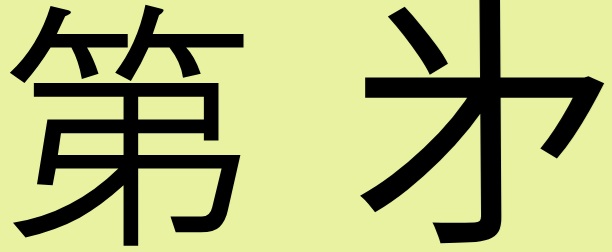
Abbreviated forms such as 㐧 should not be confused with kyūjitai (旧字体), the older forms of kanji that correspond to many modern shinjitai.
For more details, see What Are Kyūjitai? A Guide to Traditional Japanese Kanji.
Why Was 㐧 Created?
The character 第 requires eleven strokes, while 㐧 can be written with far fewer.
Reducing the number of strokes made the character faster to write and easier to fit into a limited space.
This was particularly useful for signs, engraved plates, technical labels, and handwritten documents.
When letters were carved into metal or other hard materials, a simpler form was also easier to produce.
The abbreviated shape could remain legible even when the character was small.
For these practical reasons, 㐧 became one of the abbreviated character forms used in Japan.
It was not created to give 第 a different meaning.
Its purpose was simply to represent the same character in a more compact form.
The abbreviated form has also been associated with lettering used for mechanical engraving.
Explanatory materials concerning the Japanese standard JIS Z 8903, which dealt with standard lettering for mechanical engraving, have introduced a simplified form of 第 resembling 㐧.
This background helps explain why the character is often found on signs, plates, and other forms of practical lettering rather than in ordinary books or newspapers.
Where Can You Still See 㐧 Today?
Although 㐧 is uncommon in ordinary writing, it has not completely disappeared.
Several well-known examples can still be found in Japan.
Road Signs for the Daini-Shinmei Road

ButuCCFont “GD-HighwayGothicJA" – pumpCurry in Japan, CC BY-SA 2.1 JP, via Wikimedia Commons
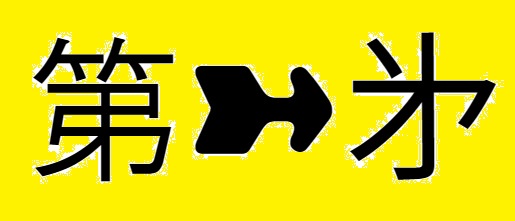
E93 DAINI SHINMEI ROAD:The abbreviated character 㐧 appears in the name of the Daini-Shinmei Road.
One of the best-known examples appears on signs for the Daini-Shinmei Road, an expressway in Hyōgo Prefecture.
Its Japanese name is normally written 第二神明道路.
On some road signs, however, the first character 第 is replaced by 㐧.
The sign therefore appears as 㐧二神明道路.
This is a good example of the character being used where space and visibility matter.
The abbreviated form is compact while retaining the same meaning and pronunciation as 第.
The Daiichiya Seipan Logo
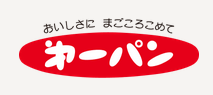
Another famous example is the logo of Daiichiya Seipan, a Japanese bread company.
The company name begins with 第一, meaning “number one” or “first.”
In its traditional logo, the first character is written as 㐧, producing the distinctive form 㐧一パン.
The logo shows that 㐧 is not limited to old documents.
It has also survived as part of a recognizable corporate design.
Old Signs and Engraved Plates
The character can also be found on older shop signs, railway-crossing plates, machine labels, and engraved nameplates.
One documented example is a railway-crossing plate reading 平山㐧三踏切, in which 㐧三 means “No. 3.”
Such examples reflect the practical reason the abbreviated form was used.
It saved space, reduced the amount of engraving required, and remained easy to recognize.
For most modern readers, these signs and logos are now the main places where 㐧 is likely to be encountered.
Is 㐧 an Official Kanji?
Although 㐧 is a real character, it is not considered part of the standard set of kanji used in modern Japanese.
It is not included in the Jōyō Kanji, the official list of commonly used characters taught in Japanese schools.
It is also not included in the Jinmeiyō Kanji, the list of characters approved for use in personal names.
As a result, 第 is almost always used in books, newspapers, official documents, and everyday writing.
However, this does not mean that 㐧 is an invented or unofficial character.
The character has its own Unicode code point (U+3427), allowing it to be displayed digitally across modern operating systems and software.
Although it is absent from many standard kanji dictionaries, larger reference works and specialized character dictionaries include it as an abbreviated form of 第.
Today, 㐧 survives mainly as a historical and practical character rather than one used in everyday communication.
How Is 㐧 Different from 第?
The difference between 㐧 and 第 is mainly one of appearance rather than meaning.
Both characters are read dai and perform exactly the same grammatical function when placed before numbers.
The standard form 第 is used in virtually all modern Japanese writing, while 㐧 is reserved for special situations such as historic signs, company logos, engraved lettering, and a few road signs.
| Character | Modern Usage |
|---|---|
| 第 | The standard character used in books, newspapers, official documents, and everyday writing. |
| 㐧 | An abbreviated form that survives mainly on road signs, company logos, engravings, and historical materials. |
For Japanese learners, recognizing 㐧 is useful because it occasionally appears in places where the standard character 第 would normally be expected.
Quick Facts about 㐧
Here are the key facts about this unusual Japanese character.
| Feature | Details |
|---|---|
| Reading | Dai |
| Meaning | Abbreviated form of 第 |
| Common Uses | Road signs, company logos, engravings, historical signs |
| Jōyō Kanji | No |
| Jinmeiyō Kanji | No |
| Unicode | U+3427 |
Although rarely used today, 㐧 remains a fascinating example of how Japanese writing has adapted to practical needs over time.
Interested in another unique Japanese character? Learn about 〆, a symbol that many people mistake for a simple abbreviation but which has a fascinating history of its own.
⇒ What Does the Japanese Symbol “〆" Mean?
Conclusion
At first glance, 㐧 may look like an unfamiliar or even mysterious character.
In reality, it is simply an abbreviated form of 第, created to reduce the number of strokes while preserving the same meaning and pronunciation.
Although modern Japanese almost always uses 第, the abbreviated form still appears in places such as road signs, company logos, and engraved lettering.
These surviving examples offer a glimpse into an older style of practical writing that is still visible across Japan today.
Learning about characters like 㐧 also reveals that the Japanese writing system has evolved through everyday use as well as official standardization.
Even a rarely seen character can tell an interesting story about the history of written Japanese.
If you’re interested in other unique characters and symbols used in Japanese writing, you may also enjoy learning about 々, the repetition mark that replaces repeated kanji in everyday words such as 人々 and 時々.
👉 What Does the Japanese Symbol “々" Mean?