What Does the Japanese Symbol “々” Mean? A Complete Guide to the Kanji Repetition Mark
Have you ever seen a Japanese word like 人々, 時々, or 色々 and wondered what the mysterious symbol 々 means?
At first glance, it looks like a kanji, but it is actually something different.
The symbol 々 is a special mark used in Japanese writing to indicate that the previous kanji should be repeated.
Instead of writing the same character twice, Japanese uses this compact symbol to make words easier to read and write.
Because 々 appears in many everyday words, place names, and family names, it is one of the first special symbols that Japanese learners encounter.
Understanding how it works can make reading Japanese much more natural.
In this guide, you’ll learn what 々 is, why Japanese uses it, how words containing it are pronounced, and how it differs from other Japanese repetition marks.
What Is the Japanese Symbol “々"?
The symbol 々 is a kanji repetition mark, meaning it tells the reader to repeat the kanji immediately before it.
The following examples show how 々 replaces the second occurrence of the same kanji.
| Without the repetition mark | Standard Japanese |
|---|---|
| 人人 | 人々 |
| 日日 | 日々 |
| 山山 | 山々 |
Although 々 appears alongside kanji, it is not a kanji itself.
Instead, it is a special symbol used only to indicate repetition.
In Japanese, this symbol is commonly called dōnojiten (同の字点).
It is also classified as a type of odoriji (踊り字), a group of symbols used to repeat previously written characters.
In English, 々 is often referred to as the kanji iteration mark or kanji repetition mark.
Unlike ordinary punctuation, 々 always follows a kanji and cannot be used independently.
Why Does Japanese Use “々"?
The main purpose of 々 is to avoid writing the same kanji twice.
Instead of repeating identical characters, Japanese replaces the second one with 々.
This makes words shorter, easier to read, and visually cleaner.
Here are a few common examples.
| Repeated kanji | Standard spelling |
|---|---|
| 人人 | 人々 |
| 時時 | 時々 |
| 色色 | 色々 |
Using 々 also improves the appearance of written Japanese.
Repeating complex kanji can make text look crowded, while 々 creates a cleaner and more balanced layout.
Historically, repetition marks have been used in Japanese writing for centuries.
They became a practical way for scribes and printers to reduce repetitive writing while preserving the original meaning of a word.
Today, 々 remains a standard part of modern Japanese and appears in books, newspapers, websites, official documents, and everyday communication.
How Is “々" Used and Pronounced?
The symbol 々 does not have a pronunciation of its own.
Instead, it tells you to repeat the previous kanji as part of the word.
However, the pronunciation is not always an exact repetition.
Depending on the word, the sound may change because of rendaku (sequential voicing), or because the word has developed an established historical reading.
The following table shows some common examples.
| Word | Reading | Meaning |
|---|---|---|
| 人々 | hitobito | people |
| 時々 | tokidoki | sometimes |
| 山々 | yamayama | mountains |
| 国々 | kuniguni | countries |
| 色々 | iroiro | various |
| 各々 | onoono | each; respectively |
For example, 人々 is pronounced hitobito, not hitohito.
This change is caused by rendaku, a common feature of Japanese pronunciation.
Another interesting example is 各々, which is pronounced onoono rather than kakukaku.
This is an established historical reading of the word rather than a special rule of the repetition mark itself.
Words containing 々 appear almost everywhere in Japanese.
You will see them in newspapers, novels, manga, advertisements, websites, and everyday conversations.
Because many common words use this symbol, becoming familiar with it is an important step toward reading Japanese naturally.
Is “々" a Kanji?
Although 々 appears together with kanji, it is not considered a kanji itself.
Instead, it is a symbol that tells the reader to repeat the preceding kanji.
Unlike ordinary kanji, 々 has no meaning or pronunciation when used on its own.
Its role is purely grammatical, making repeated characters easier to read and write.
In digital character encoding, 々 is assigned the Unicode code point U+3005, allowing computers to recognize and process it as a distinct character.
However, this technical classification does not make it a kanji.
It remains a repetition mark used exclusively after another kanji.
This distinction explains why Japanese dictionaries list words such as 人々 and 時々, but do not treat 々 as a standalone kanji entry.
Can “々" Be Used in Names?
Yes.
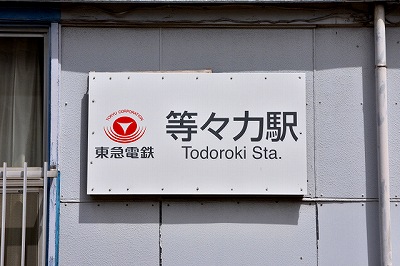
The symbol 々 is commonly found in Japanese family names.
Some well-known examples include:
| Family Name | Reading |
|---|---|
| 佐々木 | Sasaki |
| 佐々 | Sassa |
| 日々野 | Hibino |
In these names, 々 serves the same purpose as it does in ordinary words by repeating the preceding kanji.
Because Japanese surnames often preserve historical spellings, learners may encounter 々 in names even before they fully understand how the repetition mark works.
Recognizing this symbol makes reading signs, name cards, and official documents much easier.
Although 々 appears in many surnames, it is much less common in given names.
Other Japanese Repetition Marks
The symbol 々 is the best-known repetition mark in Japanese, but it is not the only one.
The following table introduces several related marks.
| Symbol | Used For | Notes |
|---|---|---|
| 々 | Kanji | The standard kanji repetition mark used in modern Japanese. |
| ゝ | Hiragana | Repeats the previous hiragana without voicing. |
| ゞ | Hiragana | Repeats the previous hiragana with voicing. |
| ヽ | Katakana | Repeats the previous katakana without voicing. |
| ヾ | Katakana | Repeats the previous katakana with voicing. |
| 〻 | Kanji | An older repetition mark that is now rarely used in modern writing. |
Although these symbols share the same basic purpose, 々 is by far the most common and is the one that Japanese learners are most likely to encounter.
If you’re interested in other unique symbols used in Japanese writing, you may also enjoy learning about the 〆 symbol, which has a completely different purpose despite often being mistaken for a kanji.
👉 What Does the Symbol 〆 Mean?
Conclusion
The Japanese symbol 々 is not a kanji but a repetition mark that replaces the second occurrence of the same character.
It makes written Japanese shorter, clearer, and easier to read.
You’ll encounter 々 in many common words, family names, books, newspapers, websites, and everyday conversations.
Learning how it works is a small step that can make a big difference in your ability to read natural Japanese.
Once you recognize 々, you’ll begin noticing it everywhere—and understanding Japanese text will become much more intuitive.
Curious about other unusual characters used in Japanese? Learn how 㐧, an abbreviated form of 第, has been used on road signs, historical documents, and in modern Japan.
👉 What Is 㐧? The Abbreviated Form of 第
Another symbol that often confuses Japanese learners is ヶ.
Although it looks like a small katakana ケ, it actually has a different origin and is commonly used in counters and place names.
→ What Does the Japanese Symbol “ヶ" Mean? Why It Isn’t the Katakana ケ
References
- Unicode Consortium. CJK Symbols and Punctuation (U+3005 IDEOGRAPHIC ITERATION MARK).
- Shogakukan. Digital Daijisen (Japanese dictionary), entries for 「踊り字」 and 「同の字点」.
- Kodansha. Kodansha’s Furigana Japanese Dictionary. Kodansha USA.