What Is an Oni? How Japan’s Invisible Spirits Became Horned Demons
When you hear the word oni (鬼), you may picture a frightening creature with horns, fangs, tiger-skin clothing, and an iron club.
However, oni were not always imagined this way.
In this article, we’ll explore what oni originally meant and how they developed into the familiar monsters seen in Japan today.
What Is an Oni?
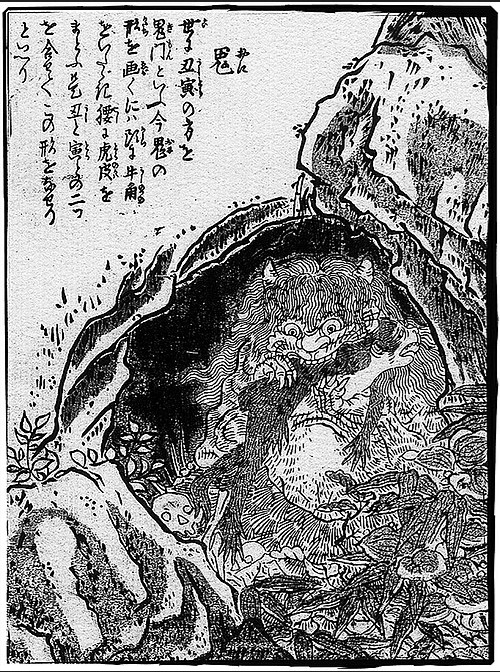
An oni (鬼) is one of the best-known supernatural beings in Japanese folklore.
Modern oni are commonly depicted as powerful humanoid monsters with horns, fangs, and fearsome faces.
They are often shown with red or blue skin, wearing tiger-skin clothing and carrying an iron club called a kanabō (金棒).
Oni is often translated into English as “demon" or “ogre," but neither word is an exact equivalent.
The Japanese concept has a long history and has taken many different forms.
Oni are only one part of Japan’s diverse supernatural tradition.
For more legendary beings, see our guide to Japanese Mythical Creatures.
Oni Were Originally Invisible Spirits
Older meanings associated with oni differ considerably from the monster familiar today.
Historical Japanese usage included spirits of the dead, supernatural spirits, and invisible beings believed to cause harm.
An oni did not necessarily have horns, fangs, or even a visible body.
One traditional explanation connects the word oni with on (隠), referring to something hidden or unseen.
This etymology is not certain, but it reflects an important aspect of older ideas about oni as beings concealed from human sight.
The Japanese concept also developed alongside the Chinese 鬼, a character associated with spirits of the dead.
How Did Oni Become Monsters?
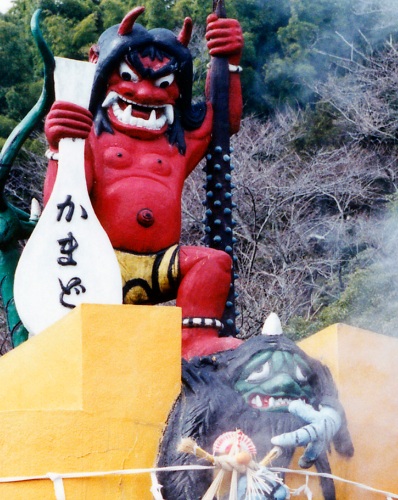
The familiar oni did not emerge from a single tradition.
Chinese ideas about spirits interacted with indigenous Japanese beliefs, while Buddhism introduced frightening supernatural beings such as rakshasas (羅刹) and gaki (餓鬼).
Over time, these different traditions influenced the Japanese concept of oni.
Beings that could once be understood as invisible or spirit-like increasingly appeared in stories and art as visible monsters with terrifying physical forms.
By the medieval period, oni were commonly depicted as powerful creatures that could attack or abduct humans.
Stories and illustrated narratives helped establish the image of oni as recognizable humanoid monsters.
The change did not happen at a single moment.
Older ideas about spirits and newer images of physical monsters overlapped and gradually developed into the broad concept of oni known today.
Oni are not the only Japanese supernatural beings whose appearance changed over time.
Tengu also evolved dramatically, from mysterious supernatural phenomena into the long-nosed and bird-like figures familiar today.
Why Do Oni Have Horns and Wear Tiger Skin?
A widely known explanation for the oni’s horns and tiger-skin clothing is connected with kimon (鬼門).
Kimon refers to the northeastern direction, traditionally regarded as an unlucky direction associated with harmful supernatural forces.
In the traditional twelve-direction system, the northeast lies between ushi (丑), the Ox, and tora (寅), the Tiger.
According to this interpretation, the Ox is associated with the oni’s horns, while the Tiger is associated with its tiger-skin clothing.
- Ox (丑) → horns
- Tiger (寅) → tiger skin
- Northeast (丑寅) → kimon (鬼門)
This is a widely known explanation of the symbolism behind the familiar appearance of oni.
However, it should not be taken as proof that the oni’s appearance originated entirely from this idea.
The familiar image developed over centuries under several religious, folkloric, and artistic influences.
What Do Oni Represent in Japanese Culture?
Oni have represented fear, violence, disaster, evil, and other harmful supernatural forces.
They appear as dangerous enemies in folktales and as frightening beings associated with punishment in Buddhist traditions.
Oni are also closely associated with Setsubun, a Japanese seasonal event held in early February.
During mamemaki (豆まき), people throw roasted soybeans while saying:
Oni wa soto! Fuku wa uchi!
This means:
“Oni out! Good fortune in!"
In this custom, oni represent misfortune or harmful influences that people want to drive away.
Today, oni continue to appear in festivals, stories, art, and popular culture, sometimes as terrifying monsters and sometimes as more humorous or sympathetic characters.
Conclusion
The Japanese oni (鬼) was not always the horned monster familiar today.
Older concepts included invisible spirits and supernatural presences, while Chinese, Buddhist, and Japanese traditions gradually influenced the image of oni as visible monsters.
The familiar oni is therefore the result of centuries of change in Japanese belief, folklore, and art.